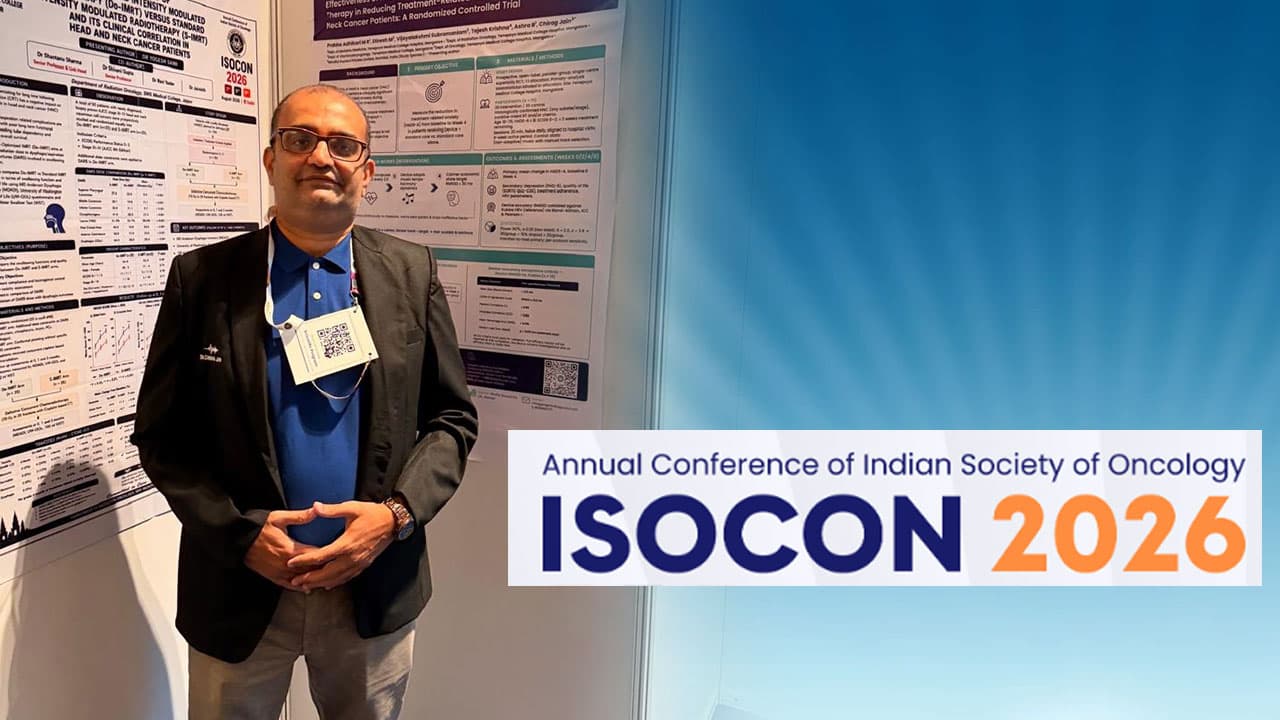


Dr. Chirag Jain Proposed Onco-Anxiology Framework for Cancer Anxiety

Mumbai, September 2026: Cancer care may need to look beyond tumour treatment to better understand anxiety across the cancer journey.
A new perspective published in Frontiers in Psychology proposes an anxiety-focused framework within psycho-oncology. The paper, authored by physician and researcher Dr. Chirag Jain, calls this proposed framework onco-anxiology.
The paper asks whether cancer anxiety deserves more focused and repeated clinical attention. It examines how anxiety can differ from depression and general psychological distress in people with cancer.
Why Cancer Anxiety Needs a Closer Look
Anxiety during cancer can differ from general psychological distress. It may involve hypervigilance, anticipatory dread, and heightened physiological arousal.
The feared future can also be medically possible. Fear of cancer recurrence is one important example.
This makes cancer anxiety different from anxiety based mainly on an unrealistic threat. Clinical care must account for uncertainty rather than simply dismissing the fear.
What Is Onco-Anxiology?
Onco-anxiology focuses specifically on anxiety throughout the cancer journey.
The framework brings together three clinical commitments:
Anxiety-specific targeting rather than relying only on broad distress screening
A longitudinal approach across different stages of cancer care
Attention to cancer-specific mechanisms that can shape anxiety
The concept remains a testable organising framework within psycho-oncology.
Cancer Can Change How Anxiety Appears
Cancer treatment can create anxiety patterns that are closely linked to the treatment experience itself.
Three mechanisms receive particular attention:
Conditioned anticipatory symptoms: Treatment settings can trigger physical and emotional responses before treatment begins.
Somatic confounding: Cancer symptoms, pain, anaemia, and treatment effects can overlap with physical signs of anxiety.
Anxiety–symptom coupling: Anxiety can worsen symptoms such as nausea. Poorly controlled symptoms can then increase anxiety before later treatment sessions.
For example, anxiety may increase nausea, while nausea can strengthen anticipatory anxiety before the next treatment.
Anxiety Can Change Across the Cancer Journey
Anxiety does not necessarily remain constant from diagnosis through survivorship.
Potential periods of vulnerability include:
Diagnosis
Active treatment
Treatment completion
Surveillance
Recurrence
Treatment completion may represent a period of vulnerability as regular clinical contact becomes less frequent.
However, these patterns occur at a population level. Individual experiences can vary considerably.
The Challenge of Anxiety Assessment
The framework draws attention to the difference between distress screening and anxiety-specific assessment.
A potential clinical pathway is:
Distress screening → Anxiety-specific assessment → Longitudinal follow-up
An Indian tertiary-centre study cited in the work found moderate-to-extreme distress in 53.5% of patients. Only 8.6% were referred to psycho-oncology services.
These figures measure different outcomes. They should not be interpreted as an anxiety-treatment gap.
They do, however, illustrate challenges in connecting distress identification with specialised psychological care.
Where Does HRV Fit?
Heart rate variability, or HRV, is discussed as a potential physiological research tool.
It may provide another layer of information alongside patient-reported anxiety. However, HRV is affected by several cancer-related and treatment-related factors.
These include medications, anaemia, cardiotoxicity, autonomic dysfunction, and advanced disease.
Therefore, HRV remains a research-stage adjunct rather than a diagnostic biomarker.
What Comes Next?
Further research will need to examine whether anxiety-specific assessment can improve identification and monitoring.
Key areas include:
Validating anxiety-specific assessment
Mapping anxiety across the cancer trajectory
Studying physiological measures
Testing adaptive interventions
Evaluating implementation in clinical settings
For now, onco-anxiology represents a testable framework within psycho-oncology.
Its clinical value will depend on prospective validation, reproducible measurement, and evidence of meaningful patient benefit.
Source: [ https://www.frontiersin.org/journals/psychology/articles/10.3389/fpsyg.2026.1939608/full ]